Commercial Insurance for General Contractors
Protect your commercial and residential projects, manage subcontractor liabilities, and secure comprehensive builder's risk coverages.
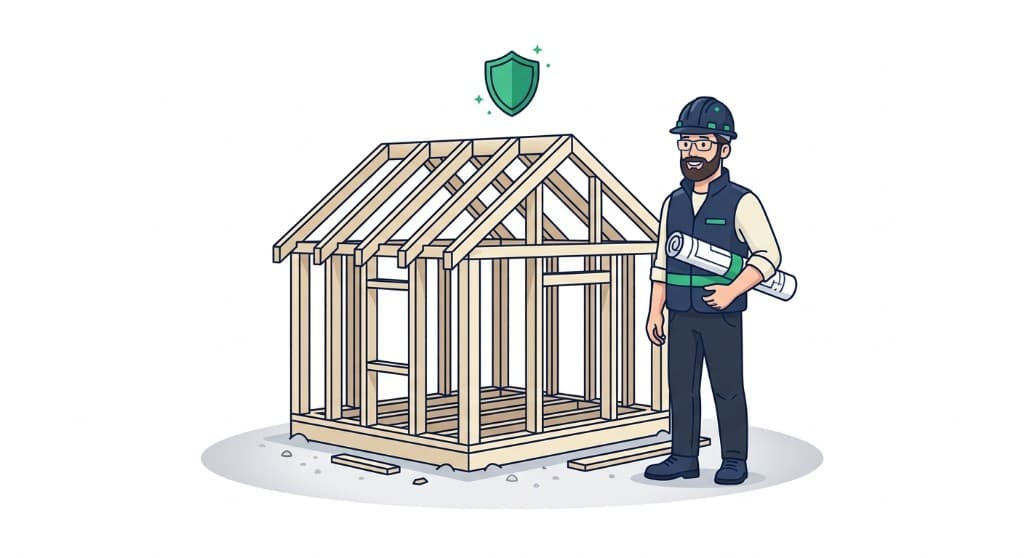
Risk Management & Insurance Protection for General Contractors
General Contractors manage complex jobsites, coordinate multiple specialized trade subcontractors, and oversee expensive materials. Your risk profile isn't just about what you physically do; it's about the collective liabilities of every plumber, electrician, and framer you hire. If a subcontractor triggers a massive loss and their own policy has lapsed, the liability falls entirely on you. A general contractor package must feature robust CGL, Builder's Risk, and tight subcontractor exclusion safeguards.
Top Commercial Hazards Face
- Subcontractor liability and lapsed certificate exposures.
- Structural failures and broad-scale property damage.
- On-site material theft, vandalism, and tool loss.
- Completed operations defects or structural claims years post-build.
Recommended Policy Bundle
Most General Contractors accounts combine several types of coverages to avoid major out-of-pocket exposure gaps:
- Commercial General Liability (CGL) (with strong Completed Operations coverage)
- Builder's Risk / Course of Construction (covers structure during building)
- Inland Marine / Installation Floater (covers materials in transit and awaiting installation)
- Commercial Fleet Coverage
Real Trade Claims Case
“During construction of a custom residential home, heavy winds collapse an unbraced framing wall overnight, damaging the foundation slab and destroying $35,000 worth of lumber stored on-site.”
Localizing to Ontario?
Are you an Ontario based business? We have a dedicated, hyper-localized insurance guide for General Contractors that reviews WSIB guidelines, local regulations, and RIBO broker compliance rules.
General Contractors Insurance FAQs
- What is Builder's Risk insurance and who buys it?
- Builder's Risk (Course of Construction) covers a building while it is under construction. It can be purchased by either the property owner or the General Contractor, but it is critical to define who holds the policy in your construction contract.
- Why must I collect subcontractor Certificates of Insurance (COIs)?
- If a subcontractor causes a claim (e.g., a plumber starts a fire) and they do not have active insurance, your own CGL policy must pay. Insurers audit general contractors; failing to prove active subcontractor COIs can lead to retro-active premium penalties.
- Does GC insurance cover architectural design mistakes?
- No. Professional design mistakes belong under Professional Liability (E&O). If you offer design-build services, you must add an E&O endorsement to your contractor package.
Compare General Contractors Insurance Rates
Submit your application in 3 minutes. Our network of specialized brokers will compete to win your coverage.